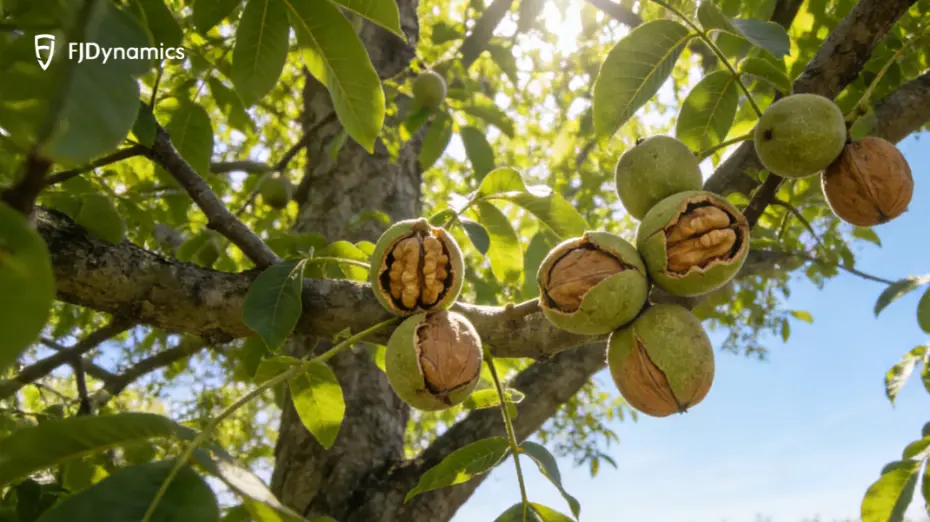
France is the top producer of walnuts in Europe. Every year, the country grows nearly 35,000 tons of walnuts. These beautiful trees can be found across France, especially in famous areas like Grenoble and Périgord.
Growing walnuts is about more than just farming; it is a long-term investment. It requires careful planning and hard work to ensure a good harvest in the future. As farming technology improves, farmers are using new methods to make sure these valuable crops succeed.
Growing a great walnut harvest starts long before seeing the first nut. It begins with planting each tree in exactly the right spot. This step is so important that it can decide the future of the whole farm. Today, new tools like the FJD AT2 autosteering make this work much easier and more accurate than doing it by hand.
The Foundation of Success: Soil and Spacing
To ensure successful walnut farming, farmers must focus on two main things: the soil and the spacing. These trees have very deep roots and are sensitive to the ground they grow in. Choosing the right soil and giving the trees enough room is the only way to help them thrive.
Soil Selection: The Non-Negotiable First Step
Choosing the right soil is the most important step for a successful walnut plantation. Walnut trees are very sensitive to "wet feet," meaning they cannot survive in waterlogged ground. For this reason, excellent drainage is essential; if water sits around the roots for too long, it will cause root rot, which can stunt the tree's growth or even kill it. To prevent this, farmers must ensure the land allows water to flow away easily.
Beyond drainage, the physical and chemical makeup of the soil must support deep growth. Walnut trees have massive root systems that need at least 1.5 to 2 meters of clear, deep soil to establish themselves and find moisture. Additionally, the soil pH should be between 6.5 and 7.5. This slightly acidic to neutral range is the "sweet spot" that allows the trees to absorb all the nutrients they need to grow strong and produce a healthy harvest.
Precision in Spacing: Allowing Room to Flourish
How a farmer spaces walnut trees directly affects how much sunlight and air each tree gets. This is very important for how many nuts the trees produce. If they are planted too close together, they will fight for resources, which leads to a smaller harvest.
- Traditional Approach: Historically, walnut trees have been planted with generous spacing, typically 8m x 8m (156 trees per hectare) or 10m x 10m (100 trees per hectare). This allows each tree ample room to grow to its full mature size, maximizing light exposure for nut production.
- Intensive Planting: Modern techniques sometimes opt for more intensive spacing, such as 7m x 4m (357 trees per hectare). While this can initially increase the number of trees per hectare, it comes with a caveat: it demands more aggressive and consistent pruning to ensure that adequate sunlight reaches all parts of the tree, especially the lower branches.
The Distance Marker Advantage from FJD AT2
Modern walnut farming needs exact spacing, so that every tree has enough room to grow. Because of this, more farmers are using the FJD AT2 autosteering and its Distance Marker feature. This smart technology guides the tractor with centimeter-level accuracy. It ensures each tree is planted in the perfect spot for long-term success.
The Distance Marker works by marking points at set distances across a field. As the tractor reaches each spot, the system gives an alarm. This tells the farmer exactly when to stop and plant, making it easy to create a perfectly spaced plantation without any guesswork.
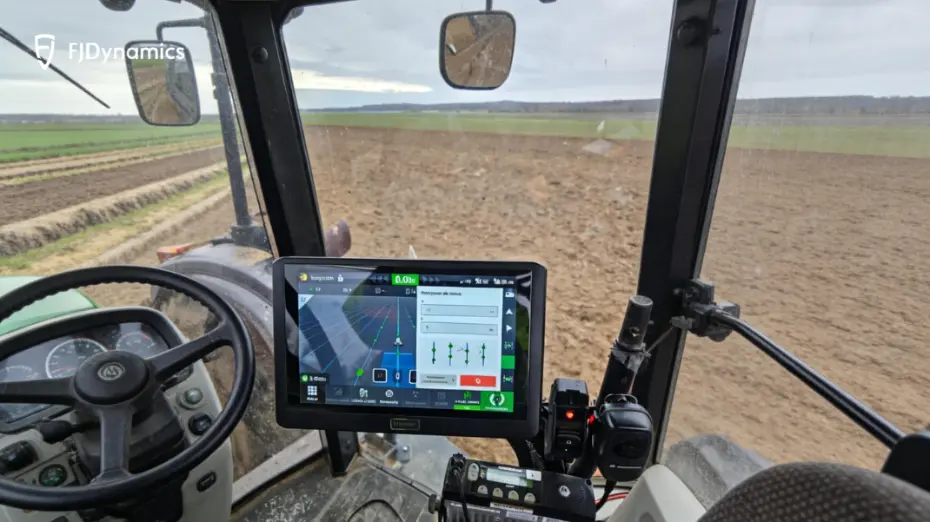
Recently, a farmer in eastern France utilized this cutting-edge feature for their new walnut plantation. The process is simple yet revolutionary:
- Map the Plan: The farmer inputs the desired planting layout and spacing into the FJD AT2 system.
- Guided Precision: As the tractor moves across the field, the AT2's auto-guidance steers it along the pre-defined path.
- Accurate Stops: The Distance Marker Feature precisely identifies each planting spot. When the tractor reaches one of these marked points, the system can accurately signal or even stop the tractor, ensuring the tree is planted exactly where it needs to be.
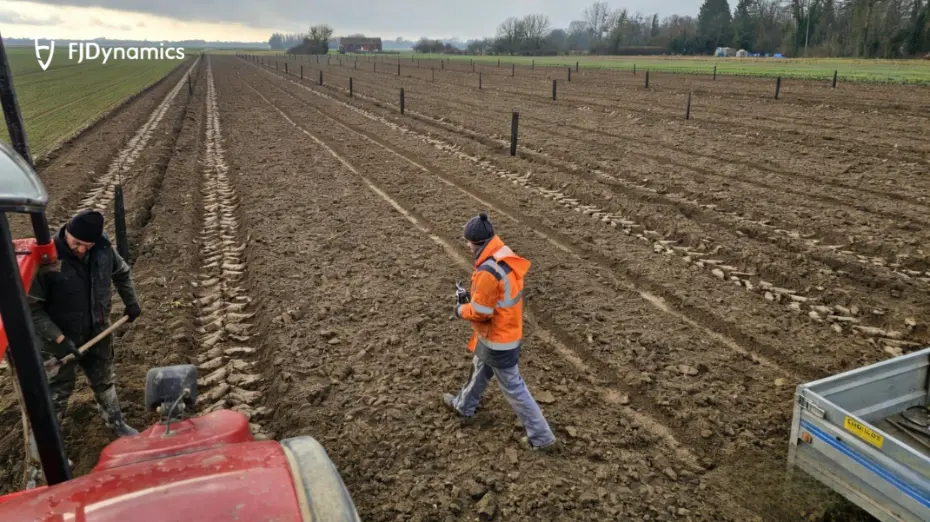
The feedback from the field speaks volumes: "The FJD AT2 auto-guidance marking function provides centimeter-accurate assistance for planting my walnut trees!" This glowing testimonial underscores the transformative power of precision agriculture in a field that has traditionally relied on manual measurements and markers.
Why Centimeter Accuracy Matters for Walnuts
Precise planting is a big help for walnut farms because these trees grow for many years. When every tree has the right amount of space, they all get enough sunlight and food from the soil. This makes the trees healthier, helps them grow at the same speed, and ensures they produce as many nuts as possible.
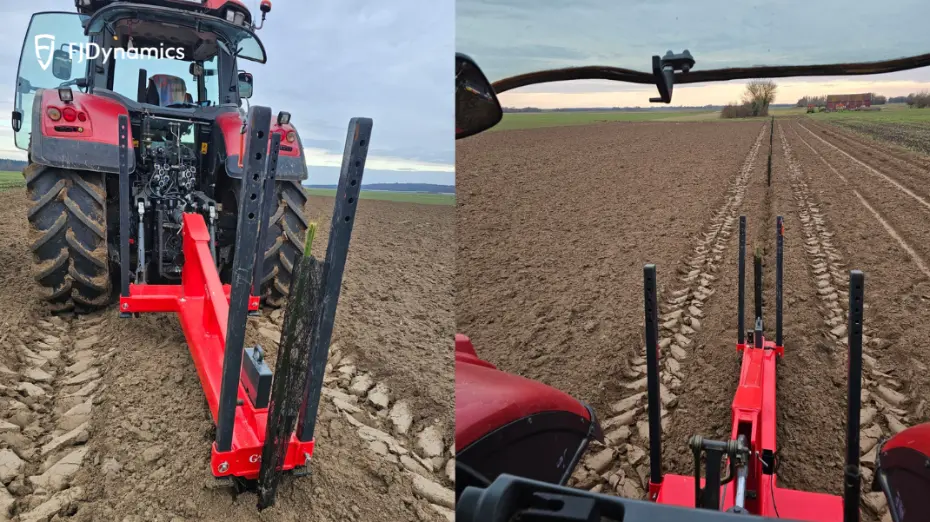
Accurate planting also makes daily farm work easier. Straight rows make it simple to set up water pipes, trim branches, and use harvesting machines. It takes away the guesswork, so no time or money is wasted fixing mistakes. By starting with precision, a farm is ready for new technology and many years of success.
Tradition Meets New Technology
France has a long history of growing walnuts. Today, the industry is growing because farmers are using both old traditions and new tools. Systems like the FJD AT2 autosteering are now very important. By mixing years of farming experience with exact precision, French walnut farmers are creating a more successful and sustainable future.
If your business involves planting trees, our AT2 system can help you plant with perfect accuracy. Contact FJDynamics today to see a product demo or to ask about buying your own!