In the world of modern farming, the agricultural sprayer has become an indispensable partner. Whether you are managing a small family orchard or thousands of acres of broadacre crops, your sprayer is the primary tool used to deliver the nutrients and protection your plants need to thrive.
At its core, a sprayer is a simple machine: it consists of a storage tank, a distribution system (pumps and hoses), nozzles, and pressure regulators. However, choosing the right one is where things get complicated. With the right choice, you can wipe out pests and diseases while saving money on chemicals. With the wrong choice, you risk under-dosing your crops—leading to failed harvests—or over-dosing, which wastes money and can contaminate the local environment.
This guide will walk you through the essential factors to consider, from your specific crop type to the latest "2.0" spraying technologies that are changing the industry.
Matching the Sprayer to Your Crop
The very first question you must ask is: What am I growing? The structure of your field or orchard determines the physical size and shape of the machinery you need.
For Tree Crops and Vineyards (Orchard Sprayers)
If you are managing an orchard or a vineyard, space is your biggest challenge. You need a machine that can operate between tight rows without damaging the branches or fruit.
- Tractor-Mounted Sprayers: These are the workhorses for large-scale operations. They offer high capacity and power but require wide enough rows for the tractor to pass through (usually 4 meters or more).
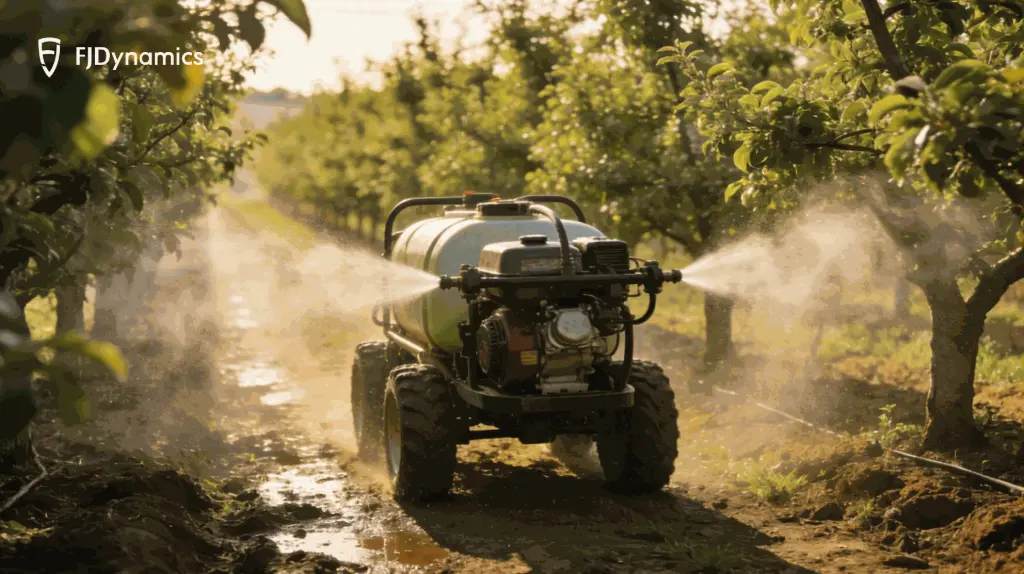
- ATV-Mounted Sprayers: For smaller farms or narrow-row configurations, an ATV-mounted sprayer is much more maneuverable. They are lighter and can navigate tight corners that a tractor simply cannot reach.
- Backpack Sprayers: While they aren't practical for a 50-acre farm, backpack sprayers remain a vital tool for spot treatments, nursery work, or very small specialty plots where motorized machinery cannot go.
For Broadacre and Field Crops (Boom Sprayers)
If you are treating wheat, corn, or soy, your goal is uniform coverage across a massive surface area. The boom sprayer is the best choice in this category.
These machines are equipped with long horizontal arms (booms) that can hold up to 18 or more nozzles. They are designed to apply the same dose of chemical across a wide path in a single pass. Depending on your farm size, common boom lengths include:
- 12ft (3.5m): Ideal for small fields or utility work.
- 20ft (6m): A balanced choice for mid-sized operations.
- 30ft (9m) and above: Designed for high-efficiency, large-scale farming where time is of the essence.
Understanding the Technology: How the Liquid Travels
Once you know the frame of the machine you need, you have to decide on the delivery method. How the liquid moves from the tank to the plant makes a big difference in how much chemical you use.
Hydraulic Sprayers: The Traditional Choice
Hydraulic sprayers are the most common systems found on farms today. They use a pump to push liquid through hoses and out of a nozzle. The pressure from the pump breaks the liquid into droplets, usually between 200 and 400 microns in diameter.
These are reliable and easy to maintain. However, because the droplets are relatively large, you often need to use a higher volume of water to ensure the entire plant is wet. While they are great for general application, they can sometimes lead to "run-off," where excess chemical drips off the leaf and into the soil.
Low-Volume Sprayers: The Precision Mist
Low-volume sprayers work differently. Instead of just using liquid pressure, they use high-speed air (sometimes moving as fast as 200 mph!) to "shatter" the liquid into a very fine mist. These droplets are tiny—anywhere from 0.05 to 100 microns.
Because the droplets are so small, they act like a fog. This fog can penetrate deep into dense foliage, covering the underside of leaves and hidden stems that a traditional hydraulic sprayer might miss. The benefit here is efficiency: because you are getting better "coverage" per drop, you can often use less total chemical to achieve the same result.
The 2.0 Revolution: Drones and Targeted Spraying
We are currently living through a major shift in agriculture. As climate change makes weather patterns less predictable and environmental regulations become stricter, "blanket spraying" (spraying the whole field regardless of weed density) is becoming a thing of the past.
The Rise of Drone Spraying for Agriculture
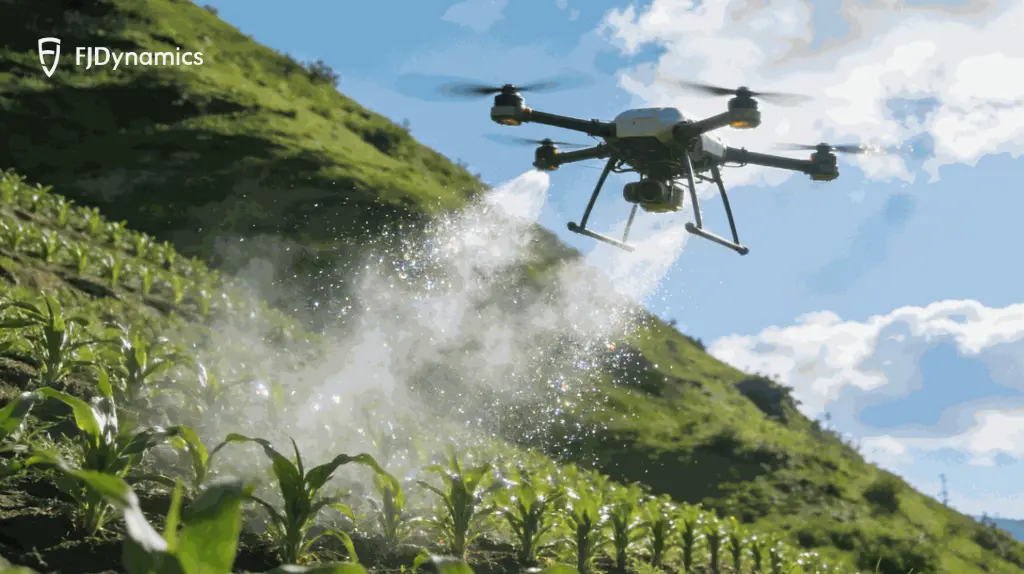
Drone spraying is no longer a hobby—it is a professional solution. Drones offer several unique advantages:
- Energy Efficiency: Drones are significantly lighter than tractors or ATVs, meaning they use a fraction of the energy to get the job done.
- Safety on Slopes: Spraying on a steep hill with a tractor can be dangerous. A drone removes that risk entirely by flying at a stabilized altitude.
- Difficult Terrain: If a field is muddy or waterlogged after a storm, a tractor will get stuck. A drone doesn't care about the ground condition; it stays on schedule regardless of the mud.
Targeted Spraying: The "Individual Plant" Level
Perhaps the most exciting trend is targeted spraying technology. Using advanced sensors and cameras, these systems can "see" a weed and distinguish it from the crop.
Instead of spraying the entire field, the machine only opens the nozzle when it is directly over a weed. This is a game-changer for profitability. Imagine only using 20% of the herbicide you used to buy because you are no longer spraying the bare dirt between the plants. This technology works day or night and is one of the most effective ways to reduce your environmental footprint while increasing your bank balance.
Making Your Final Decision
When you sit down to make a purchase, use this checklist to narrow down your options:
- Surface Area: How many acres do you need to cover in a single day? This determines tank size and boom width.
- Crop Spacing: How wide are your rows? This determines if you need a tractor, ATV, or narrow-track machine.
- Chemical Sensitivity: Are you using expensive chemicals that require the precision of a low-volume or targeted system?
- Terrain: Is your land flat, or do you have steep slopes and boggy areas that would be better served by a drone?
A Smart Investment for Your Farm
Choosing the right sprayer means finding a balance between your crop needs, your budget, and the environment. While a standard sprayer works well for large farms today, new technology like drones and targeted spraying is making "precision" the top priority.
By picking a machine that sprays evenly and reduces waste, you are protecting both your crops and the future of your farm. Whether you use a traditional tractor or a high-tech drone, the goal is always the same: the right amount of chemical, in the right place, at the right time.
FJDynamics offers solutions to upgrade your sprayer with either section control or nozzle control technology. If you aren't sure if our technology fits your equipment, contact us today to schedule a demo on your farm!