Picture yourself standing at the edge of a massive 100-acre field. Your job is to plant millions of tiny seeds, and you have to get it exactly right. Every seed needs to be at the same depth, spaced perfectly from the next one, and lined up in a dead-straight row so you can get back in with your tractor later.
Doing this by hand would take forever, and the results would be a mess. That is exactly why the seed drill was invented. It is one of the most important tools in farming history.
Think of a seed drill as a high-speed "factory on wheels." It takes the messy job of throwing seeds by hand and turns it into a fast, precise, and professional process. In this blog, we will explain the simple science behind how these machines work and why they are so essential for row-based planting tasks.
What Is a Seed Drill?
A seed drill is a row crop planting machine pulled by a tractor that plants seeds at just the right depth and covers them with soil automatically. This protects your seeds from being eaten by birds or drying out in the sun. Because the machine plants in neat, organized rows, every plant gets the space, sunlight, and nutrients it needs to grow strong and healthy.
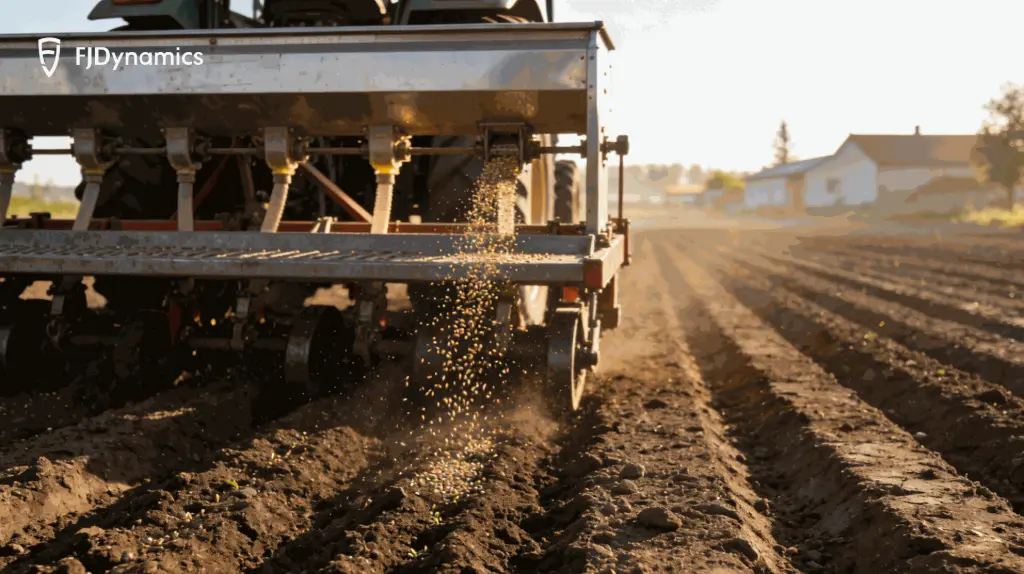
Before this tool existed, farmers had to throw seeds by hand. This was wasteful and led to patchy, uneven crops. Today, using a seed drill is much faster and can make your harvest up to eight times bigger than old methods. Whether you use a standard drill or a high-tech planter, it is the best way to save time and make sure every seed you plant has the best chance to grow.
Seed Drill Planting: The Five-Step Process
A seed drill is more than just a box with holes. It is a smart system built to follow the rules of good farming automatically. As a tractor pulls the drill across the field, five mechanical steps happen fast to get crops started right.
Step 1: Opening the Furrow (Preparing the "Bed")
At the very front of the machine are the openers. These are usually metal discs or V-shaped blades that act like tiny plows. As the machine moves, the openers slice into the soil to create a consistent trench, known as a furrow.
The science here is all about depth. If a seed is too deep, it will run out of energy before it reaches the surface. If it’s too shallow, it may dry out or be eaten by birds. The seed drill allows farmers to set the opener to a specific depth—ensuring every "bed" is just right.
Step 2: Metering (The "Heart" of the System)
Inside the large hopper (the tank holding the seeds) is the precision seed metering device. This is the most critical part of the machine because it controls the "rate" of planting. It prevents the machine from dumping too many seeds in one spot. Depending on the crop, farmers use different metering technologies:
- Fluted Rollers: These look like tiny water wheels. As they spin, the grooves (flutes) catch a specific number of seeds and drop them into the tube. This is perfect for small grains like wheat or barley.
- Vacuum (Pneumatic) Systems: High-tech drills use air suction to hold a single seed against a spinning disc. At the right moment, the suction stops, and the seed drops. This is how we get the extreme precision needed for crops like corn or sunflowers.
- Finger Pick-up: Mechanical "fingers" grab individual seeds and release them one by one.
Step 3: Dropping the Seed (The Placement)
Once the metering device releases the seed, it falls through a seed tube. This tube is positioned directly behind the opener. Because the tube leads straight into the bottom of the trench, it ensures that the seed doesn't bounce away or get blown by the wind. It lands exactly where the opener just cleared the path.
Step 4: Covering (Tucking Them In)
Immediately behind the seed tube is the coverer. This is often a set of metal plates, a dragging chain, or small discs. Their job is to pull the loose soil from the sides of the furrow back over the seed. This "tucks the seed in," protecting it from the sun and keeping it in a moist environment.
Step 5: Pressing (Firming the Foundation)
The final step is the press wheel. This heavy rubber or metal wheel rolls directly over the covered furrow. It doesn't just flatten the dirt; it "firms" it. By pressing the soil down, it ensures there are no air pockets around the seed. This "seed-to-soil contact" is vital because it allows the seed to soak up moisture from the earth, which triggers germination.
Versatility in the Field: From Grains to Grasses
While the term "seed drill" often brings wheat to mind, these machines are incredibly versatile. In modern farming, we categorize their use based on how the crop grows:
- Small Grains: Wheat, barley, oats, and rice are the "classic" seed drill crops. They are planted in many narrow rows close together.
- Row Crops (The Planters): For crops like corn, soybeans, and cotton, we use an advanced version of the seed drill called a precision planter. These ensure that each plant is an exact distance from the next, giving each one enough "elbow room" to grow large and healthy.
- Forage and Grasses: Even the grass in a cow’s pasture or the alfalfa in a hay field is often planted with a drill to ensure the field is thick and even, without bald spots where weeds could grow.
3 Keys to Perfect Soil for a Seed Drill
Even the most expensive seed drill cannot work its magic on poor terrain. For the "production line" to run smoothly, the field must meet three criteria:
- Flat and Fine: If the field is full of large rocks or giant clumps of dry clay, the openers will jump and skip, leading to uneven depths. Farmers usually use a "cultivator" or "harrow" to crumble the soil before the drill arrives.
- The Goldilocks Moisture: If the soil is too wet, it turns into mud that sticks to the tubes and rollers, clogging the machine. If it is too dry, the soil might blow away before the press wheel can firm it down.
- Softness: The ground needs to be loose enough for the openers to slice through without needing extreme force, but firm enough to hold the shape of the furrow.
Why the Straight Line Matters for a Seed Drill
Does it matter if rows are crooked? In modern farming, the answer is a big yes. Driving in perfectly straight lines ensures that every inch of land is used optimally, preventing "dead zones" or wasted overlapping seeds. This gives every plant its fair share of sunlight and nutrients.
Straight rows are also vital for the future of the crop. Later in the season, farmers will need to drive through the field to spray or fertilize. If rows are crooked, the tractor's tires will likely crush healthy plants. Straight row planting also makes harvesting much faster and easier.
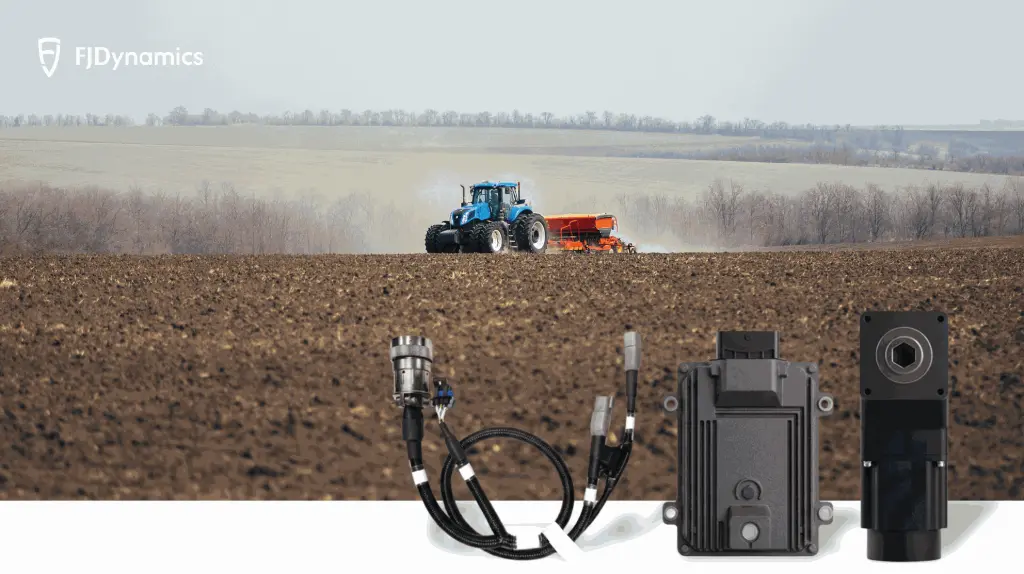
In the past, farmers spent all day squinting at the horizon to stay straight. Today, precision technology for planting, like the FJD AT2 and FJD APS, use implement lift sensor and seed flow monitoring module to atuomatically guide the seeding with perfect accuracy. This lets farmers stop worrying about the steering wheel and instead focus on their seed drill, ensuring the depth and seed flow are working perfectly.
The Backbone of Modern Farming
The seed drill is a vital tool that uses simple engineering to feed the world. By turning planting into a precise, five-step process, it makes farming much more productive and less wasteful. Whether your farm is small or large, this machine gives every seed the best start possible. Today, adding modern GPS technology makes this process straighter and more accurate than ever, helping farmers succeed with every crop they plant.
Interested in trying the APS or need advice on the right setup for your farm? Contact us today. We'll have a dedicated specialist or local distributor reach out to help you as soon as possible.
[Discover FJD APS] | [Contact FJDynamics]