You bought a high-end tractor guidance system. You set your A-B lines perfectly. Your screen shows a perfect "0" deviation. But when you look in the rearview mirror, your heart sinks.
The rows behind you are crooked. There are gaps on the uphill side and overlaps on the downhill side.
For corn and wheat farmers working on 50-100 hectares of rolling land, this is a constant, expensive headache. As one of our test users in Poland put it:
"The most frustrating thing isn't driving crooked. It's when my monitor swears I'm driving straight, but I can see the seeder sliding downhill with my own eyes. It makes you lose trust in the machine."
You paid for precision, so why aren't you getting it? The problem usually isn't your tractor. It is physics. Here is why your auto steer drifts on hills, and the affordable technology ecosystem that fixes it.
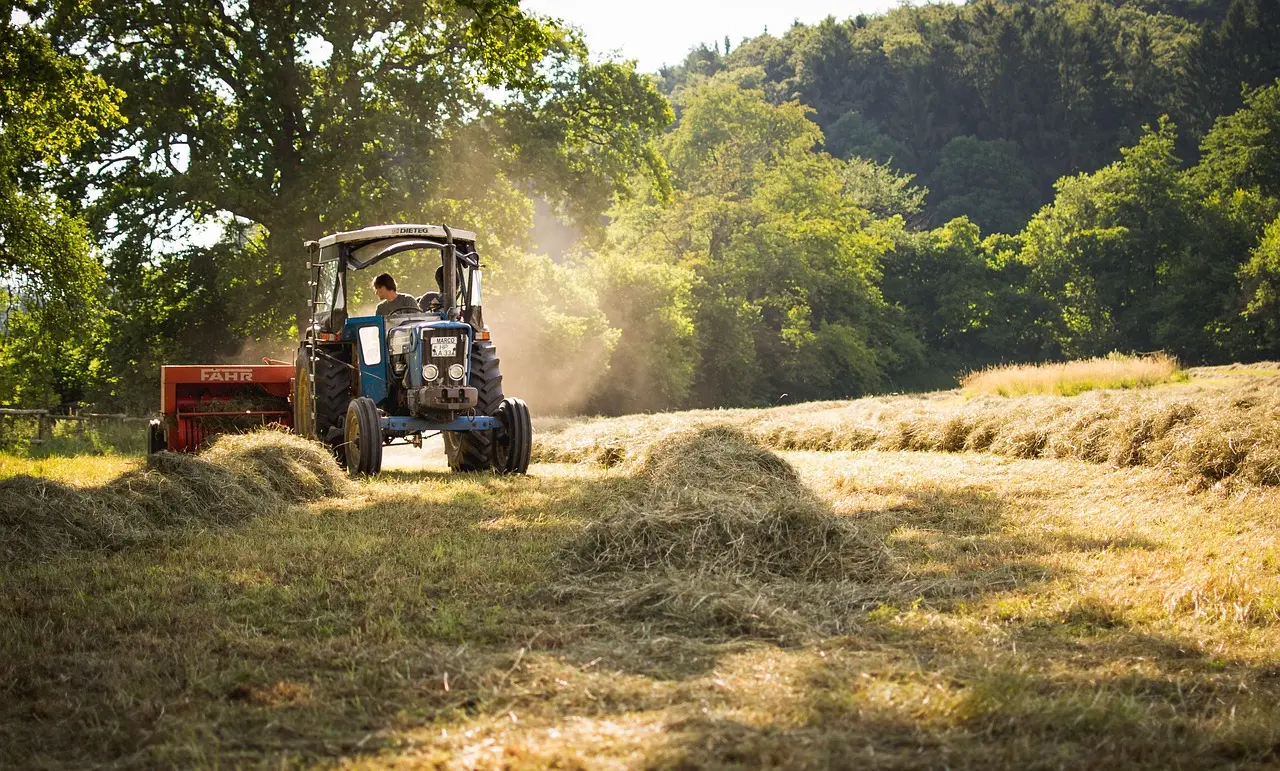
Why Does My Tractor Auto Steer Drift on Slopes?
This is the most common question we get from farmers working on undulated terrain.Standard automatic steering systems (like the FJD AT2 Max) have a blind spot: they only know where the tractor is. They assume the implement (your planter, seeder, or sprayer) is following directly behind in a straight line.
On flat ground, that assumption works. But on sidehills, contours, or loose soil, gravity takes over.
- The Physics: While your tractor tires have traction, your heavy implement slides downhill. This is often called "crab walking."
- The Result: Your tractor is on the green line, but your tool might be 10, 15, or even 20 cm off-track.
Is It Drift? A Quick Diagnosis
If you aren't sure if you need implement guidance, check this table. These are the classic signs that gravity is beating your GPS:
Symptom | Typical Cause | Cost to You |
"Guess Rows" Don't Match | Planter drifts downhill on return passes. | Harvester header loss (corn ears on ground). |
Crop Damage on Slopes | Cultivator slides into the crop row. | Direct yield reduction (killed plants). |
Uneven Row Spacing | Implement "crabs" sideways on contours. | Wasted land & uneven sunlight/nutrients. |
Operator Neck Strain | Constant manual steering correction. | Fatigue & slower operation speed. |
To fix these issues, you don't need a heavier tractor; you need to give your implement its own "eyes."
What Is Implement Guidance and How Does It Work?
Implement guidance is the technology of correcting the implement's position, not just the tractor's.We solve this with FJD Path Assist. Instead of relying on guesswork, we install a dedicated GNSS receiver and an angle sensor directly onto your implement.This creates a real-time feedback loop:
- Detection: The implement tells the system via ISOBUS: "I am drifting 15 cm downhill."
- Calculation: The system calculates the necessary compensation angle.
- Correction: It automatically guides the tractor slightly uphill to compensate.
The result is that your implement stays perfectly on the A-B line, even if the tractor has to drive slightly off-line to hold it there.
A Real Case: Achieving 0-2cm Precision on ±15° Slopes
Does this software logic actually hold up in real mud and hills? We conducted a rigorous field test in Poland to prove it.
We tested the FJD Path Assist on a field with steep ±15° slopes, pulling a heavy 7-meter-long trailed implement. This is a nightmare scenario for standard GPS because the long tongue of the implement amplifies the drift.
Test Highlights:
- High Accuracy: The system delivered stable 0-2cm precision during straight-line driving.
- Drift Elimination: It successfully counteracted the gravity drag, keeping rows uniform.
- 24/7 Reliability: Because it uses GNSS data rather than cameras, it performed perfectly at night.
You can read the full technical details of this test here: FJD Path Assist Field Test.
Building the Perfect Precision Setup
One of the best things about modern AgTech is that it is modular. FJD Path Assist works best when it is part of a connected ecosystem. Here is what a fully optimized setup looks like:
1. The Brain: AT2 Series Auto Steer
Path Assist needs a robust steering system to execute its commands. It pairs seamlessly with the FJD AT2 Max or the FJD AT2 Ultra. If you already run these systems, adding implement guidance is a simple upgrade, not a replacement.
2. The Connection: FJD ISOBUS
To ensure your tractor and implement talk to each other without a mess of wires, FJD ISOBUS provides the standard communication language. This makes the "plug and play" experience possible.
3. The Eyes: FJD Cameras
While Path Assist handles the steering, you still want to see what's happening behind you without straining your neck. Adding an FJD Wi-Fi Camera or Wired Camera gives you a clear view of the implement's performance on your cab screen, adding a layer of safety and peace of mind.
3 Reasons FJD Path Assist is the Best ROI for Your Farm
1. Fast and Simple Installation
You do not need to spend days in the workshop. The FJD Path Assist is designed for quick deployment. In most cases, you can have the hardware installed, calibrated, and ready to run in about 30 minutes.
2. Solves Real Pain Points for Corn & Grain Farmers
If you are growing corn or wheat on terraced or hilly land, precision is critical.
- Precision Seeding: Ensures equal spacing for every seed.
- Inter-row Weeding: Allows you to cultivate close to the crop without slicing valuable roots.
3. Cost-Effective "Passive" Guidance
You have two choices to fix drift:
- Active Steering: Expensive hardware with steerable wheels.
- Passive Guidance (FJD Path Assist): Smart software that adjusts the tractor's path.
For the vast majority of farmers, the passive approach provides the same 0-2cm accuracy but at a much lower entry cost.
Comparison: Standard GPS vs. Path Assist
Feature | Standard Auto Steer | |
Control Point | Tractor Nose Only | Implement Position |
Hill Performance | High Drift (Gaps) | High Precision (0-2cm) |
Night Operation | Good | Excellent |
Setup Time | Varies | ~30 Minutes |
Ideal Terrain | Flat | Slopes & Hills |
Final Thoughts
Stop fighting the steering wheel. If you are farming on slopes, standard auto steer is only doing half the job.
By upgrading to FJD Path Assist—and pairing it with the reliable AT2 Auto Steer ecosystem—you stop implement drift before it starts. It is the smartest way to ensure that your seeds, fertilizer, and weeding blades go exactly where they are supposed to.
Ready to stop implement drift?
Check out the full specs of the FJD Path Assist and get your rows straight this season.