You buy the tractor. You buy the planter. You own the land. So why are you still renting the accuracy that keeps your rows straight?
It is the one line item on the annual expense report that frustrates farmers more than any other. We are talking about the subscription fees for your farming gps systems.
Most farmers view this cost as a necessary evil. You want 2.5cm accuracy for planting or strip-tilling so you pay the annual fee. But what if that "license" is actually a trap? And what if the key to escaping it is simply owning the box that generates the signal?
If you are tired of monthly fees eating into your margins then it is time to talk about farm management independence. It is time to talk about owning a base station.
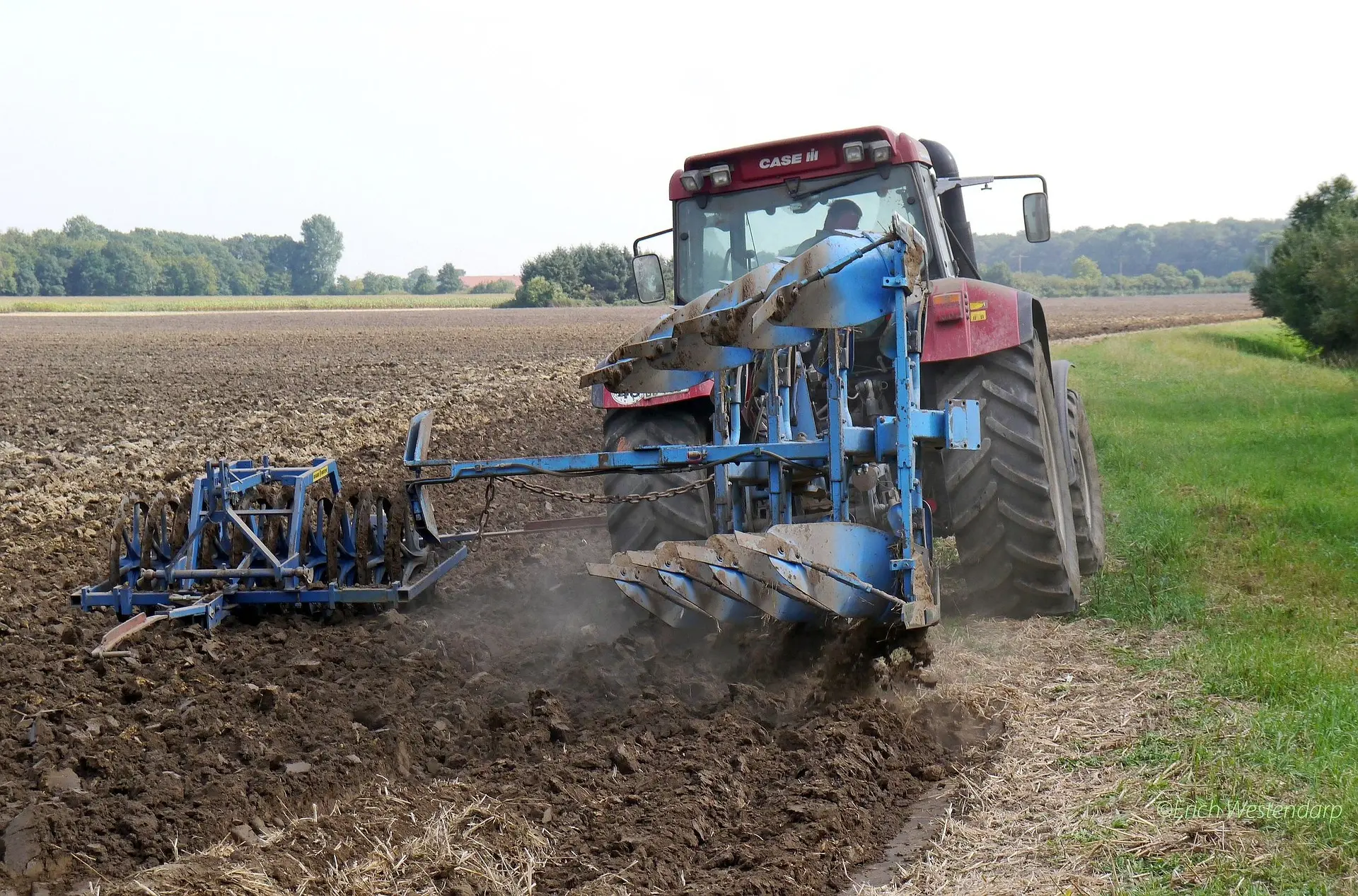
The Problem: Why Renting Precision Hurts Your Bottom Line
Let's look at the standard model. You have a receiver on your tractor. To get high precision it needs a correction signal. Traditionally you pay a provider for this stream of data.
The Voice from the FieldI was chatting with a corn grower from Iowa recently and he put it perfectly:
"Paying for a correction signal feels like renting my own front door. I already bought the house (the tractor) and the key (the receiver). Why do I have to pay over $1,000 a year just to unlock it?"
That sentiment is real. The subscription model creates two massive headaches:
- The Bleeding Cash Flow: You are locked into a forever payment. As long as you want to farm straight you have to pay.
- The Reliability Risk: If you rely on a cellular network for that signal and the cell tower goes down then your planter stops too.
The Solution: The Private Base Station
The alternative is surprisingly simple. Instead of renting a signal you make your own.
A base station is your own personal anchor point. It sits in a fixed location and knows exactly where it is. It watches the satellites and calculates the errors caused by the atmosphere. Then it sends a "correction" directly to your tractor via radio or internet.
The result is simple. You get the same RTK precision but you stop paying the landlord. You own the hardware, so the signal is yours.
ROI Analysis: The Math Behind Owning vs. Renting
Let’s get specific. Trust comes from numbers. Let's compare the cost of a typical subscription service against owning an FJD base station over five years. We will assume you are running two tractors.
Scenario A: The Subscription Trap
- Average Market Cost: ~$1,200 per tractor / year
- Fleet Size: 2 Tractors
- Annual Cost: $2,400
- 5-Year Total Spend: $12,000
Result: You spent $12,000 and at the end of Year 5 you still own nothing.
Scenario B: Owning an FJD Base Station
- Hardware Cost: One-time purchase (No recurring fees)
- Annual Subscription: $0
- 5-Year Total Spend: The initial hardware cost only
Result: For most farmers, the savings in the first 12 to 18 months alone cover the cost of the hardware. Years three, four, and five are pure profit. This is what smart farm management looks like. Plus, you can use FJD FieldFusion to manage all the input and output.
Comparison: Subscription vs. Private Ownership
For a quick look at the differences check out this breakdown.
Feature | Paid Subscription Signal | FJD Private Base Station |
Cost Model | Annual rent per machine | One-time hardware purchase |
Signal Stability | Dependent on cell towers | Independent (Radio or Local Net) |
Fleet Capacity | Pay for every single vehicle | Unlimited vehicles (One station covers all) |
Asset Value | Zero (It is an expense) | High (It is a resellable asset) |
Data Control | Provider owns the data | You own your data |
How to Choose the Right Station for You
At FJDynamics we believe you should control your own operation. We have removed the complex licensing barriers to provide straightforward gps no subscription solutions.Here are the two main ways to take control:
1. The "Set It and Forget It" Option
If you operate on a single consolidated block of land then the FJD N20 Fixed High Power GNSS Station is your best bet.
- The Setup: You mount this permanently on a shed roof or grain leg.
- The Benefit: It uses high-power transmission to cover a wide radius. It works 24/7 in rain or shine (IP67 waterproof). Once it is up it becomes a permanent utility for your farm just like electricity.
2. The "Move with the Work" Option
If your fields are scattered across the county or you are a contractor then look at the FJD V1 Base Station.
- The Setup: This unit sets up on a tripod at the field edge in minutes.
- The Benefit: You take your accuracy with you. It is perfect for fragmented land parcels where you might not have a central location for a fixed tower.
For those needing to integrate into a larger network (CORS), the FJD Trion N10 CORS System is also available.
Common Questions About Making the Switch
We often hear farmers ask: "Is it hard to configure?"
Farming is Already a High-stakes Business
You deal with weather markets and equipment breakdowns. You should not have to worry about whether your GPS bill is paid or if the cellular network is going to drop out in the back 40 acres.
By switching to a private base station you are doing more than just saving money. You are declaring independence. You are securing your own farming gps systems and ensuring that your accuracy belongs to you.
The math is clear and the technology is ready. Stop renting your precision. Start owning it.
FAQs
Q. Does a private base station work with my existing tractor brands?
A.Yes. Most modern receivers that support RTK can use a signal from a private base station as long as they communicate on the same standard protocol (like RTCM) and frequency.
Q. What is the range of a base station?
A.A portable station usually covers a few miles via radio. A fixed station like the N20 can cover significantly more ground especially if mounted high up. You can also use internet transmission (Ntrip) to extend range if you have connectivity.
Q. Is "GPS no subscription" really free after purchase?
A.Yes. Once you buy the FJD base station hardware there are no monthly or annual fees to FJDynamics for generating the correction signal. You own the equipment and the signal it produces.
Q. Can I use one base station for multiple tractors?
A.Yes. This is one of the biggest cost savers. One base station can provide correction signals to an unlimited number of tractors within its range at the same time.