You walk out to your field after harvest. It looks flat enough to the naked eye. But your bank account might tell a different story come spring.
We often talk about seed varieties and chemical choices when looking at the budget. Yet we rarely talk about the physical shape of the ground itself. If your field has even minor high spots and low spots, you are silently losing money every time you irrigate or fertilize.Here is the reality. That uneven terrain is stealing your inputs. The good news? You have a perfect window right now to fix it. Before the ground freezes solid, winter is the strategic time to deploy a land leveler.
Let’s talk about how smoothing out your soil now can save you massive amounts of water and fertilizer next season.
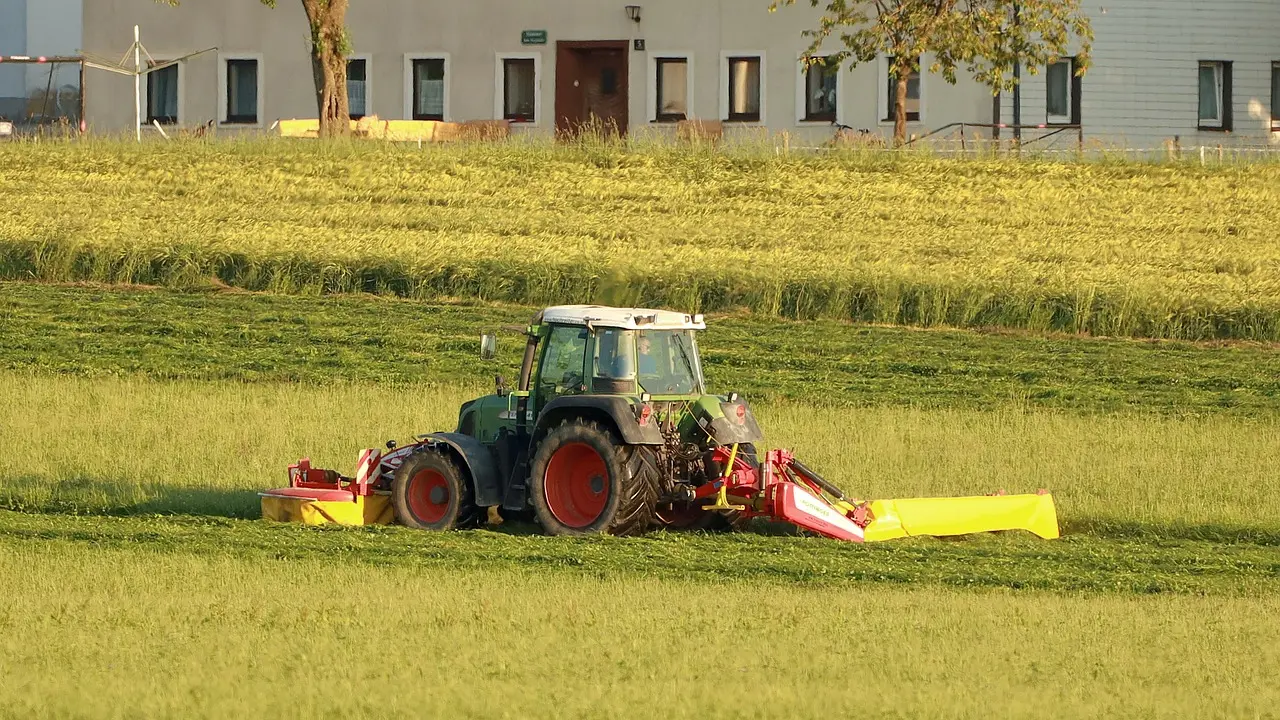
How Uneven Terrain Silently Drains Your Profits
You might think your field is flat, but water knows better. Gravity never lies.
When you run a planter or a sprayer over uneven ground, you create a chain reaction of waste.
- Waterlogging: Water pools in the low spots, drowning seeds and encouraging root rot.
- Nutrient Runoff: On a poor drainage field, expensive nitrogen washes away from the high points and concentrates in the valleys.
- Uneven Yields: You end up with burned crops in the low spots and starved, stressed crops on the hills.
I recently spoke with a farmer who switched to high-precision leveling, and he put it perfectly:
"I used to think my irrigation bill was just the cost of doing business. I didn't realize I was paying to drown 10% of my crop until I finally leveled the ground properly."
This matches what we see in the field. Farmers in regions like Mexico have reported yield improvements of up to 20% simply by fixing their land profile with GNSS technology. Furthermore, precise land leveling can reduce water usage by up to 30%. That is a third of your pumping costs staying in your pocket.
Why Winter is the Strategic Window for Land Leveling
You might be asking: Why should I worry about this now? Why not wait until spring?
- Soil Condition: In many regions, the soil is drier after harvest but not yet frozen rock-hard. This makes it easier for a land leveler to move dirt efficiently.
- Machine Availability: Your tractors aren't tied up with planting or spraying.
- Natural Settling: Leveling now gives the soil months to settle naturally before you run a planter through it.
By tackling this now, your water management strategy is ready to go on day one of the planting season.
Choosing the Right Tool: Visual vs. Data-Driven Leveling
To understand why modern solutions make sense, let’s look at the difference between traditional visual leveling and smart, data-based leveling.
Feature | Traditional Laser Leveling | |
Accuracy | Good, but limited by line-of-sight | High precision (GNSS based) 6 |
Setup Time | Slow (requires base station moves) | Fast and easy configuring |
Terrain Handling | Struggles with complex slopes | Handles complex 3D terrain mapping 7 |
Water Efficiency | Moderate improvement | Maximum efficiency (up to 30% savings) 8 |
Operator Skill | Requires high experience | Easy for new operators |
The Smart Solution: FJD AL02 3D Land Leveling System
If you are ready to fix your drainage and stop fertilizer runoff, you need a tool that sees what your eyes can't.At FJDynamics, we developed the FJD AL02 3D Land Leveling System. This isn't just a blade you drag behind a tractor. It is a smart system that uses GNSS technology to map your field's topography in 3D.
Here is the workflow that saves you money:
- Survey First: The system maps the highs and lows. You know exactly how much dirt needs to move and where.
- Precision Cuts: It automates the blade height. You achieve a perfectly level surface or a precise slope for drainage.
- Uniform Growth: By creating a uniform surface, you ensure every drop of water spreads evenly.
The "Cost of Inaction" Breakdown
We often look at farm input financing as just borrowing money to buy seeds and chemicals. But consider this: every gallon of diesel you save and every ton of fertilizer you don't waste is capital you don't have to borrow next year.
Here is a quick look at what inaction costs you vs. the potential savings with a smart land leveler:
Cost Category | Without Leveling | With Smart Leveling |
Water Usage | High (Runoff & Puddling) | -30% Savings (Optimized Distribution) |
Fertilizer Efficiency | Low (Washes away) | High (Stays in the root zone) |
Yield Potential | Inconsistent | +20% Potential Increase |
Spring Stress | High (Rushing to prep) | Low (Field is ready to plant) |
What If You Aren't Ready for a Full System?
Maybe you aren't ready to invest in a dedicated leveling implement this year. That is fine. You can still improve your field prep.
Start with the FJD AG1 Guidance System. While it is primarily for auto-steering, it gives you 2.5 cm accuracy. This helps you drive perfectly straight lines during your tillage passes. It prevents overlap and minimizes compaction. While it won't physically move dirt like the AL02, it ensures you aren't making the terrain worse by driving erratically.
Next Steps for Your Winter Prep
The window is closing. Once the ground freezes effectively, you lose the chance to reshape your drainage field profile until next year.
Take a drive out to your fields today. Look for those tell-tale signs of unevenness, the spots where water stood too long last season or where the crop was thin and yellow.
Do you want to secure those yields for next year?Here is what I can do for you right now:
Would you like me to provide a specific ROI calculation example for the FJD AL02 system based on your farm's acreage? This can help you see exactly how quickly the system pays for itself.