Curved path guidance is no longer just a feature — it’s something that must prove itself in real operations.After introducing curved path tracking for trailed implements, FJD Path Assist has undergone a series of factory-based field tests to evaluate how it performs under controlled yet realistic working conditions. The goal is simple: ensure that precision does not break down when operations move beyond straight lines.
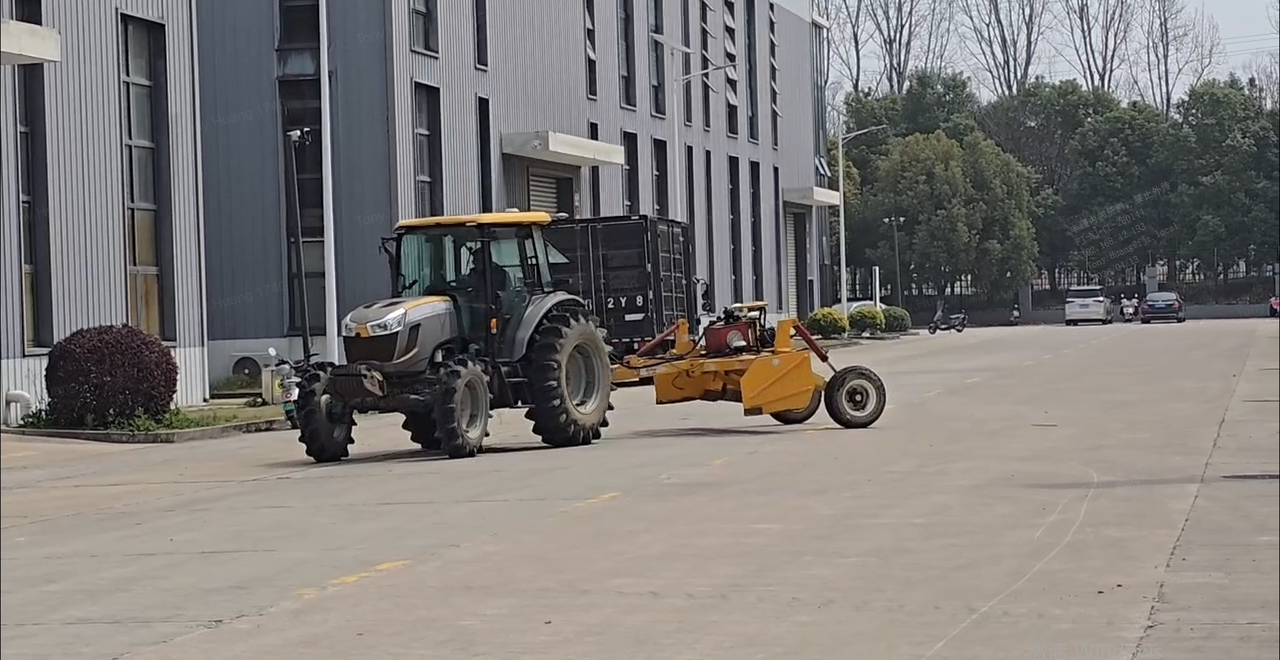
Factory Testing Setup
To validate curve performance, testing was carried out using a real tractor setup equipped with AT2 Max and Path Assist.The system configuration included:
- AT2 Max auto-steering system
- Implement-mounted GNSS receiver
- L3 IMU-based sensing system
- Integrated control for real-time implement correction
All tests were conducted on actual vehicles within a factory testing environment, simulating real-world operation scenarios while ensuring repeatability and consistency.
Where Precision Is Most Challenging: Curves
The focus of the testing was clear. Curved path performance was placed at the center, as it represents one of the most challenging situations in implement guidance.Unlike straight-line work, the implement does not simply follow the tractor’s path. It reacts with delay, is influenced by terrain and resistance, and often deviates during turning. This makes curves a critical point where traditional guidance systems tend to lose accuracy and stability.During testing, Path Assist demonstrated stable and consistent implement tracking throughout continuous curved operations. As the tractor moved along curved routes, the system continuously adjusted the implement position in real time, helping it remain aligned with the intended path.Even under dynamic turning conditions, the implement maintained smooth tracking behavior without noticeable drift or oscillation.
Powered by AT2 Max, Proven in Testing
This level of performance is made possible through the integration with AT2 Max. Together, the system not only guides the tractor but also actively manages implement behavior, allowing both to stay coordinated even when the path changes continuously.The results of factory testing confirm that Path Assist is capable of delivering stable and reliable performance in curved operations. Through multiple rounds of validation, the system has demonstrated consistent behavior across real working scenarios, showing its readiness for practical field use.
From Feature to Field-Proven Performance
Curved path guidance is no longer just an upgrade on paper — it is now a validated capability.With Path Assist, precision farming is no longer limited to straight lines. Even in curved paths and complex field conditions, operators can maintain consistency, reduce manual correction, and work with greater confidence.
Want to learn how the upgraded FJD Path Assist can improve trailed implement performance in your field operations? Contact us to explore more about curved path guidance and precision farming solutions.