Located in Ajikata, Minami Ward, Niigata, a region historically known as the “village of the former major village headman,” Komehachi Co., Ltd. operates a diversified farming business covering rice, soybeans, wheat, and vegetables.
The company has actively adopted agritech and ICT-driven farming systems, continuously introducing new technologies with a clear goal: delivering high-quality agricultural products while maintaining efficiency and enjoyment in farming. By combining advanced cultivation methods with digital tools, Komehachi has developed a highly structured and sustainable farming model.
Working closely with local governments, research institutions, and organizations, including the National Agriculture and Food Research Organization (NARO), the company also participated in a Smart Agriculture Demonstration Project. The initiative integrated multiple technologies, including auto-steering, paddy field sensors, drones, satellite remote sensing, ICT, and the farm management platform Agrinote, aiming to improve yield quality while reducing labor and operational costs.
Today, Komehachi manages approximately 50 hectares of farmland, focusing mainly on rice production while also cultivating soybeans, wheat, and upland rice. Representative Director Yoshihiro Kato has led the company’s ICT transformation for nearly seven years. Centered around Agrinote, the farm integrates satellite imagery, water-level monitoring, and harvesting data into a unified management system, enabling real-time visualization and operational decision-making.
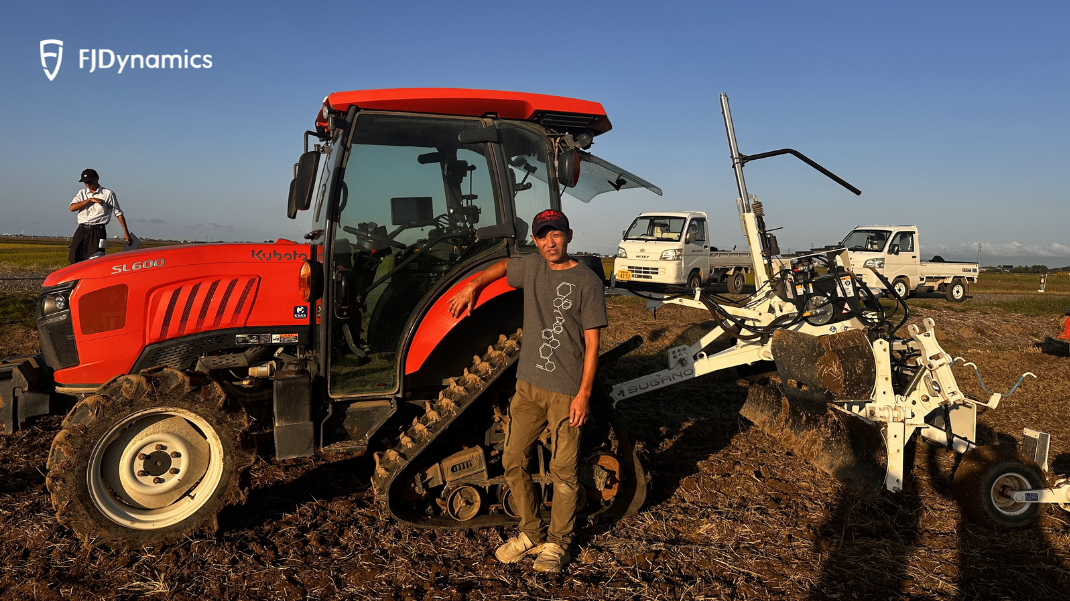
In 2020, Komehachi introduced two units of the FJD AT1 auto-steering system. Since then, the fleet has expanded to include the AT2 MAX FJD auto-steering and AL02 3D Land Leveling System, enabling consistent use of auto-steering across seeding, cultivation, spraying, harvesting, and field leveling operations.
The Importance of Uniform Plant Spacing in Soybean Production
According to Mr. Kato, one of the most significant improvements from auto-steering was observed in soybean cultivation.
“When plant spacing is uniform, intertillage and hilling become much easier. Soybeans benefited the most in this sense.”
He explained that even without auto-steering on cultivation tractors, precise seeding alone already creates a major improvement in downstream operations. Aligned row spacing reduces crop damage during hilling and significantly improves operational efficiency. This consistency creates a positive chain effect that also benefits wheat and rice management.
“If We Can’t Use Auto-Steering for Seeding, We Don’t Seed”
For Komehachi, auto-steering has become a core requirement in seeding operations.
“At this point, if we can’t use auto-steering, we don’t carry out seeding work.”
After adopting the AT1 system, the team even removed traditional physical seeding markers from tractors. Operators no longer need to focus on maintaining perfectly straight lines manually and can instead concentrate on monitoring implement performance and field conditions.
Smart Agriculture Demonstration Project: Reduced Fatigue as the Biggest Impact
During the MAFF Smart Agriculture Demonstration Project, Komehachi evaluated auto-steering from both productivity and labor reduction perspectives.
“We measured how much work could be reduced. Overlap became extremely precise, which eliminated unnecessary operations.”
While time savings were moderate, the most noticeable improvement was in operator fatigue.
“The difference in fatigue is incredible. I don’t want to drive without auto-steering anymore.”
At the time, the company used a Topcon auto-steering system priced at approximately ¥3 million per unit. Compared to that experience, the cost-performance advantage of FJD—introduced at under ¥1 million—became even more apparent.
Easy Enough for Every Generation to Use
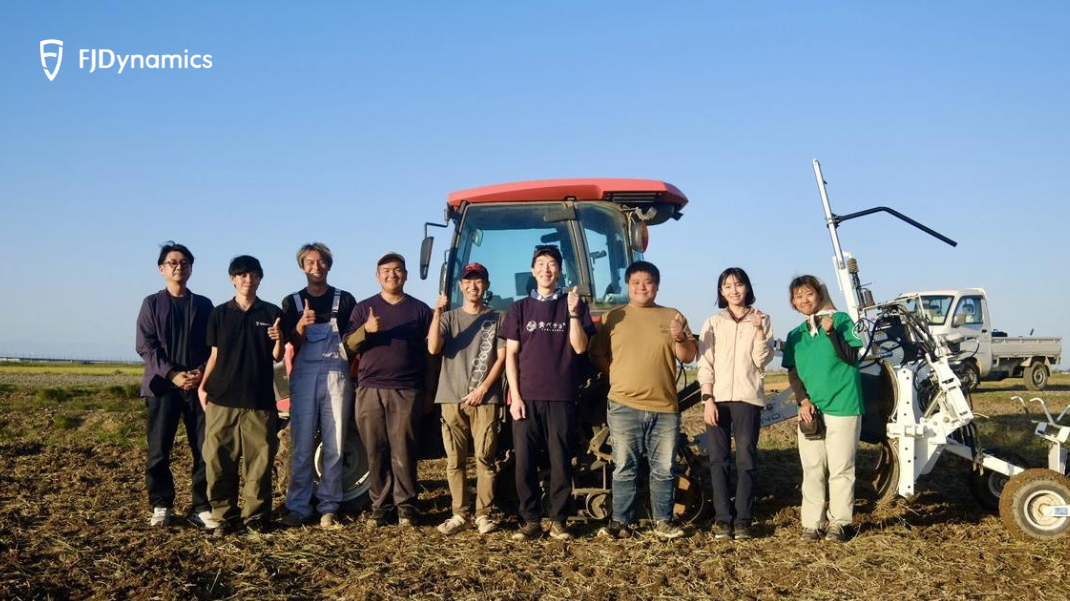
The Komehachi team consists of six operators: two veterans, two mid-career staff members, and two younger operators. According to Mr. Kato, everyone uses the FJD auto-steering systems regardless of age or experience level.
“We use auto-steering for practically every tractor operation. There are almost no situations where we don’t use it.”
He also highlighted the importance of FJD’s Japanese-language interface.
“Topcon’s monitor is entirely in English, and field registration also requires Roman characters. With FJD, everything is in Japanese, so even field registration can be completed entirely in Japanese. That makes a huge difference.”
The fully localized Japanese UI has made adoption easier across the entire team, including veteran operators. At the same time, Mr. Kato acknowledges strengths unique to other systems as well, such as Topcon’s excellent elevation visibility, and believes each solution has its own advantages depending on operational needs.
Visualizing Field Elevation Differences with the AL02
AT2 MAX Also Functions as a Rear-View Monitor
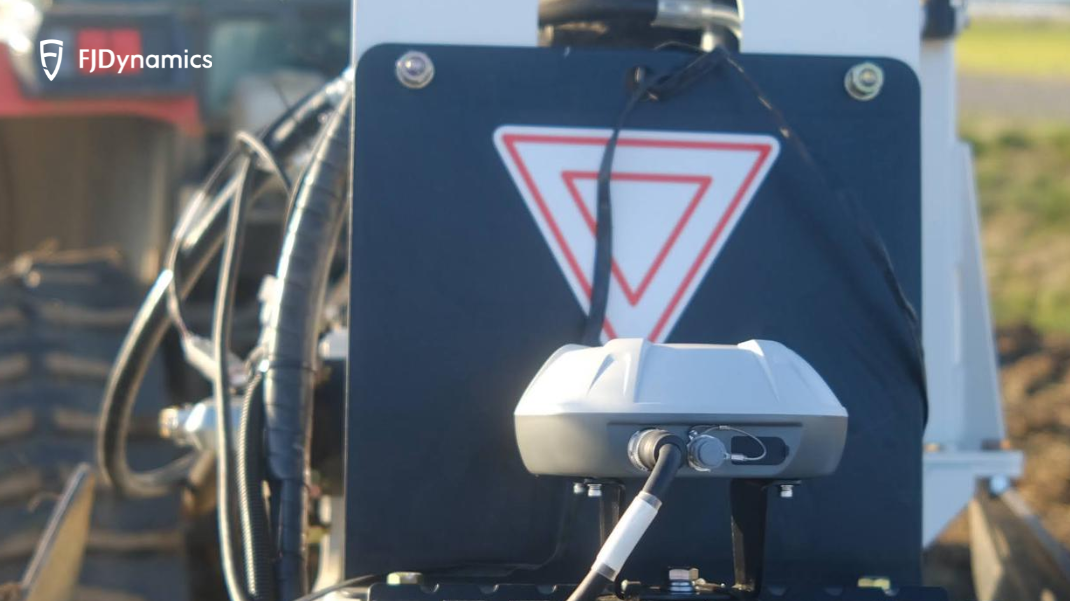
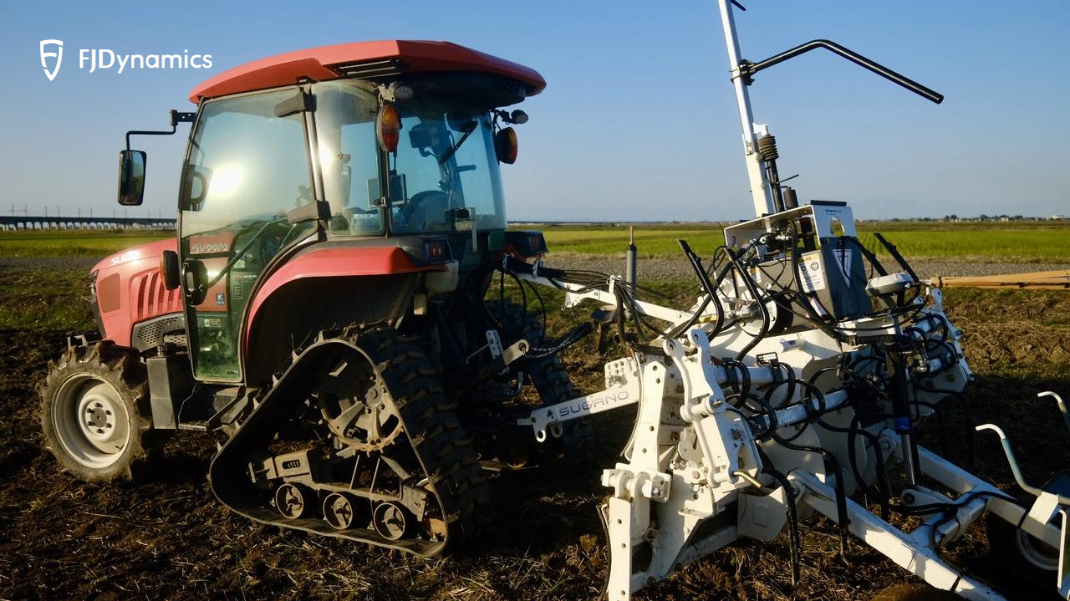
For field leveling operations, the AL02 3D Leveling System has become another key tool.
“Honestly, there are only benefits. We purchased it this autumn and used it as much as possible. Being able to visualize elevation differences on a map and save them directly to the monitor is incredibly useful.” “You simply drive around the field perimeter and make loops inside the field to collect data. The information can be saved and recalled anytime, which makes the entire process very convenient.”
Mr. Kato also pointed out a major advantage compared to conventional laser levelers: the ability to adjust reference point elevations afterward.
“Saving the data itself is already valuable. Adjusting the leveler height is easy, and even correcting the initial reference point afterward is simple. If you accidentally choose a strange reference point, the map colors become distorted, but with AL02 you can easily adjust the reference elevation later. With laser systems, large adjustments usually require re-establishing the reference point entirely. That improvement was excellent.”
Interestingly, the AT2 MAX is also being used in a unique way.
“We actually use the AT2 MAX as a rear-view monitor during leveling work. During leveling operations, you constantly need to watch how much soil is being carried behind the machine. Looking backward all the time gets exhausting. So while auto-steering is operating, we use the MAX monitor to check the rear camera instead. It really reduces neck fatigue.”
By combining auto-steering with a camera monitoring system, the company has significantly improved operator comfort during long working hours.
Dry Direct Seeding, Upland Rice, and Organic Farming Possibilities
In addition to conventional rice farming, Komehachi currently practices dry direct seeding on approximately 8 hectares and is also experimenting with upland rice cultivation without flooded paddies. Mr. Kato believes these methods may eventually open pathways toward more sustainable and organic farming systems.
“We’re exploring whether water-saving dry direct seeding combined with cultivation tools could make organic farming possible through early-stage weed control. If we continue refining the process, I think there’s real potential there.”
As the company experiments with soybeans, wheat, dry direct-seeded rice, upland rice, and cultivation-based weed management, auto-steering remains a foundational technology supporting all these efforts.
“Reducing fatigue is the biggest benefit, but another important thing is that every seeding operation feels consistent. That consistency makes every subsequent task easier. Harvesting becomes easier too. Spraying and harvesting can all follow the exact same lines.”
According to Mr. Kato, the ability to repeatedly trace the same guidance lines—from seeding to cultivation, spraying, and harvesting—is one of the greatest strengths of auto-steering technology.
Within an Integrated ICT Farming Ecosystem
At Komehachi, operational data from ICT combines, drones, paddy field sensors, and satellite imagery is centrally managed through Agrinote. This continuous cycle of visualization, analysis, and improvement helps optimize both cultivation and farm management. Within that ecosystem, auto-steering serves not only as a precision farming tool but also as a technology that significantly reduces the burden on the people working in the field.
“Smart agriculture equipment often comes with higher costs, so pricing is still a challenge in some areas. But among all smart farming technologies, I believe auto-steering is the one that delivers value every single day.”
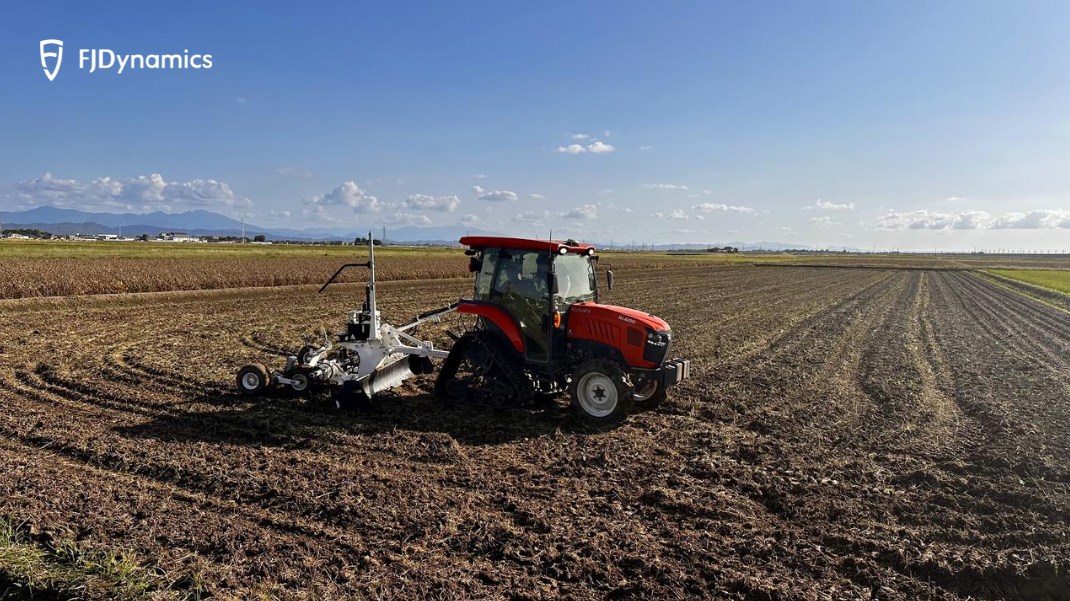
From tillage, puddling, levee shaping, seeding, dry direct seeding, intertillage, weeding, and field leveling—Komehachi continues integrating auto-steering into nearly every tractor operation as they pursue farming that is more efficient, more sustainable, and ultimately more enjoyable.
Conclusion
The experience at Komehachi reflects how auto-steering has become a core enabling technology within modern ICT farming systems. By integrating FJD auto-steering solutions and AL02 across multiple field operations, the farm has created aconsistent workflow that links field execution with digital farm management through Agrinote. This integration allows everyday operations—from seeding and cultivation to spraying and field leveling—to follow a unified guidance logic, improving both operational consistency and overall farm efficiency.
As more operations are standardized around auto-steering, Komehachi continues to demonstrate how precision farming technologies can support not only productivity gains but also more sustainable workflows and improved operator experience in real agricultural environments. For farms exploring ICT-driven transformation, integrated solutions like FJD auto-steering and AL02 provide a practical pathway toward more connected and efficient field operations.