The agricultural landscape of Guna District, India, is defined by small to mid-scale farms where efficiency, labor savings, and crop protection play a critical role in seasonal operations. In a recent field demonstration, local farmers had the opportunity to experience FJD Auto Steering technology for the first time under real working conditions.
The demonstration was conducted with the support of the FJD team, allowing farmers to observe and operate the system directly in the field.
First Impressions: From Online Awareness to Field Experience
For many participants, this was their first hands-on experience with GNSS-based auto steering, although some had previously seen similar systems online. Farmers including Simnadan Dhakad (Barkheda, Guna District) and Golu Dhakad (Guna District), participated in the demonstration and shared their feedback after operating the system in real field conditions. The initial response was positive, with farmers noting that the system was easy to understand and quickly applicable in practical farming operations.
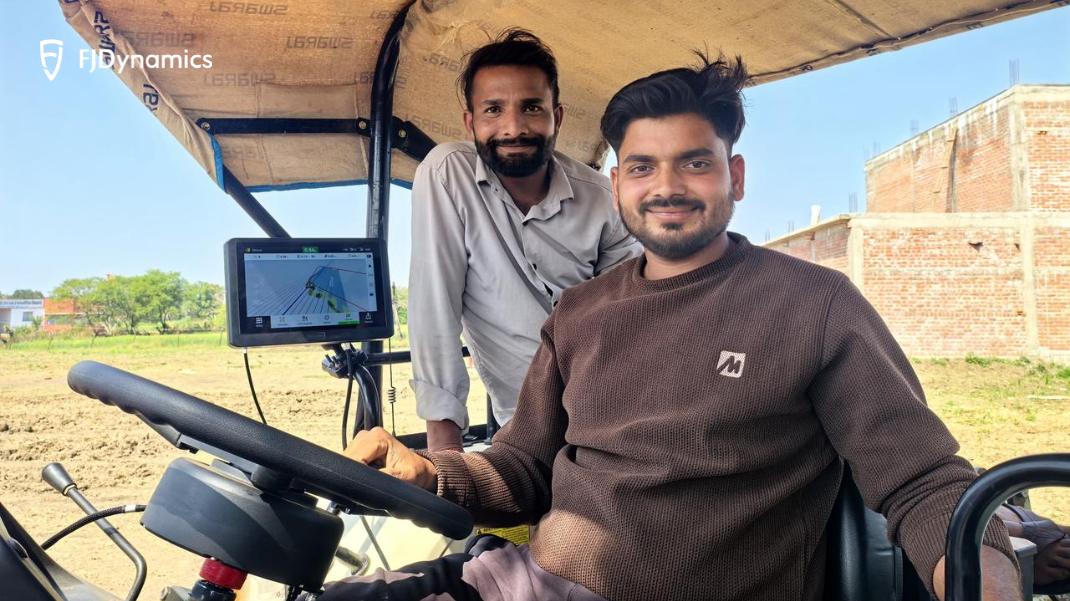
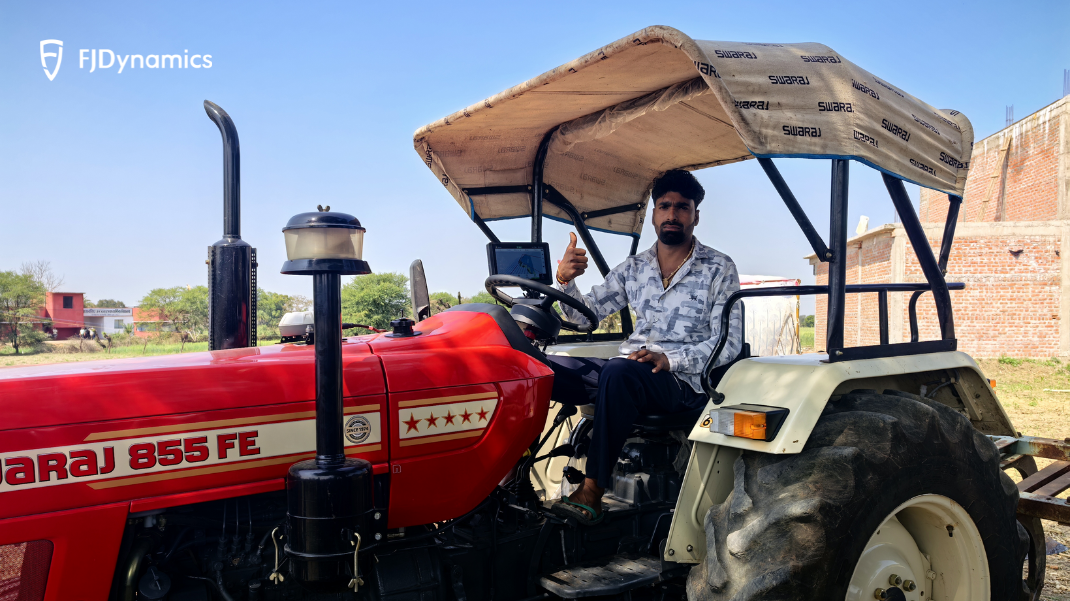
Field Experience: Precision in Maize Farming Operations
During the demonstration, farmers operated the system across typical maize farming tasks and inter-cultivation scenarios. Key observations included:
- Straight-line guidance with consistent accuracy
- Reduced overlap and repeat passes during operation
- Stable implement depth and controlled turning behavior
- Improved efficiency in maize planting operations
- Reduced crop disturbance during inter-cultivation
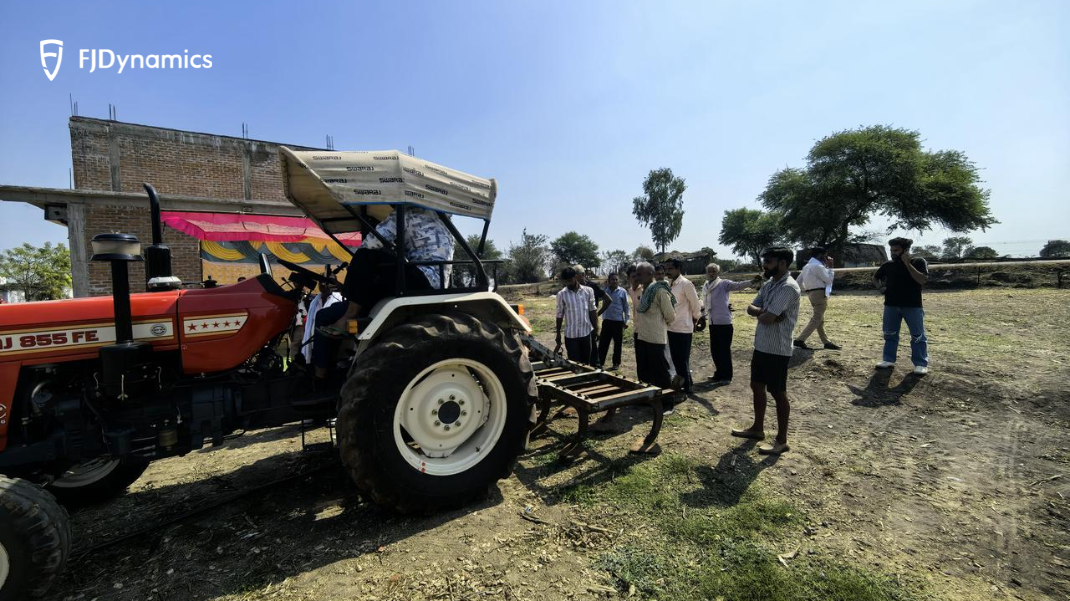
One farmer highlighted that using GPS guidance significantly improves inter-cultivation work, as it allows operations to be carried out without damaging existing crops.
Operational Benefits in Real Farming Conditions
Farmers also recognized several practical benefits that directly impact seasonal field work:
- Improved planting accuracy for maize cultivation
- Easier inter-cultivation with minimal crop damage
- Reduced soil disturbance and dust during operation
- Time savings during repeated field passes
- Lower labor dependency during peak farming season
- Reduced fuel consumption through more efficient driving paths
In addition, farmers noted that implement use, such as rotavators, becomes easier and more stable when paired with auto steering guidance.
Technology Understanding and Trust Building
Beyond operational performance, farmers emphasized the importance of clear system explanation during the demonstration. The FJD team’s on-site guidance helped users quickly understand how the system works and how it can be applied to their own farming activities. This hands-on explanation played a key role in building trust and confidence in adopting precision agriculture technology.
Adoption Signal from the Field
After experiencing the system, farmers expressed strong interest in future use, recognizing its potential to improve efficiency and reduce operational challenges in seasonal farming. One farmer summarized the experience by noting that the system is not only effective in current operations but also valuable for future agricultural activities, especially in maize production and inter-cultivation.
Looking Ahead
The field demonstration in Guna District reflects the growing adoption of precision agriculture technologies in India, particularly among farmers who are experiencing GNSS-based auto-steering systems for the first time. As awareness increases, such technologies are expected to play a greater role in improving productivity, reducing costs, and supporting more sustainable farming practices in the region.